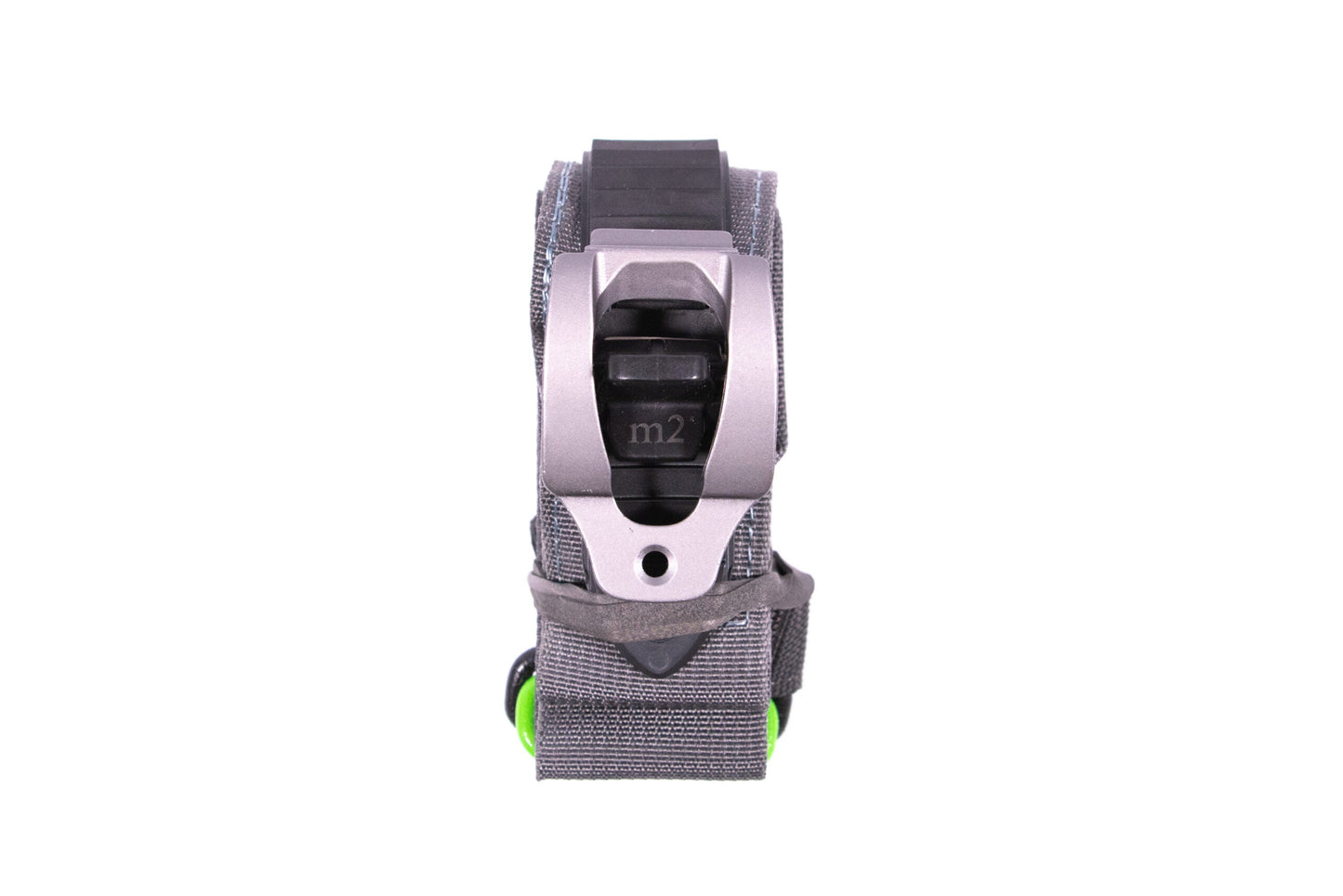
Reusable-buckle extremity hemorrhage control
Stainless Steel 1.5" Ratcheting Medical Tourniquet (RMT)
A 1.5" (38 mm) ratcheting tourniquet built around a stainless steel buckle instead of the standard polymer housing, intended for users who want a more durable, corrosion-resistant tightening mechanism for long-term carry, marine/wet environments, or repeated training reps.
- Stainless steel buckle
- 1.5" webbing width
- Self-securing ratchet
- Same mechanism family as the CoTCCC-recommended RMT
Why choose the stainless steel buckle?
-
Corrosion resistance: A stainless steel housing is intended to hold up better than polymer in prolonged wet, humid, or saltwater environments.
-
Training durability: Metal construction is built to withstand repeated ratcheting cycles during drills without the wear a polymer buckle can show over time.
-
Same incremental tightening: The buckle still advances tooth-by-tooth for controlled mechanical adjustment, matching the ratcheting action of the standard 1.5" Tactical RMT.
-
Self-securing mechanism: The buckle holds its setting without requiring a windlass rod to be secured separately.
-
Gross-motor operation: Designed for application without fine windlass manipulation, consistent with the broader RMT platform.
-
1.5" webbing width: Uses the same strap width as the standard Tactical RMT, so carry pouches sized for that model should fit.
What the published 1.5" RMT research found
The stainless steel buckle is a hardware variant of the same 1.5" ratcheting mechanism family evaluated in the studies below. These studies tested the RMT with standard polymer buckles; no independent peer-reviewed testing specific to the stainless steel buckle variant was identified, so the findings below should be read as evidence for the ratcheting mechanism generally, not a validation of this specific hardware finish.
Layperson application
In a prospective simulated-arm study involving 176 untrained adults, the RMT achieved the highest effective-application rate among four tested commercial tourniquets, at 64.4%, and the shortest mean application time.
"The RMT was the most effectively and most rapidly applied."
PubMed DOI
Arterial occlusion testing
A healthy-volunteer study of Tactical and Mass Casualty RMT configurations reported that 99% of RMT applications reached initial arterial occlusion; 1% lost occlusion during the one-minute observation period. Participants rated RMT application "97% easy."
PubMed Full article DOI
Self-securing design
A 2023 study had 64 participants apply eight tourniquet designs, including the Tactical RMT. Across the evaluated devices, ratcheting systems had fewer tightening-system mechanical problems than windlass systems.
"Self-securing systems have process advantages."
PubMed DOI
Final-tightening time
In a companion timing analysis, the Tactical RMT recorded a median 6.45 seconds from touching the tightening mechanism to a completed, occlusive and secure application in qualifying applications that began with an adequately tightened strap.
PubMed DOI
Specifications
| Webbing width |
1.5 inches / 38 mm |
| Buckle material |
Stainless steel (vs. standard polymer housing) |
| Ratchet mechanism |
0.75-inch ratcheting buckle and ladder strap |
| Instructions |
Printed on webbing |
| Related CoTCCC-recommended configuration |
Tactical RMT, NSN 6515-01-527-3841 (standard buckle) |
CoTCCC context
The Committee on Tactical Combat Casualty Care's 2019 evidence review included the Tactical Ratcheting Medical Tourniquet among its recommended nonpneumatic limb tourniquets. That recommendation applies to the Tactical RMT-T configuration tested in the underlying studies — not specifically to this stainless steel buckle hardware variant.
Review on PubMed Full peer-reviewed review
Train before you need it
Effective tourniquet use depends on recognizing life-threatening bleeding, tightening completely, and verifying that bleeding has stopped. Receive hands-on instruction and practice with the exact model and buckle hardware you carry, since the stainless steel buckle's feel and grip may differ slightly from the standard polymer version.